We've Moved


We've Moved!

Dave Donelson Tee To Green has an exciting new home at
Westchester Magazine.

We're still about all things golf, especially those pertinent to golfers in Westchester and the NY Metro, but now we're in a much bigger space!

Please visit our new home at


Showing posts with label clubs. Show all posts

Saturday, February 8, 2014

Orlimar Announces Progressive Irons

Orlimar Golf Company is introducing Tour3 irons, a progressive iron set designed to give the feel of a forged iron, yet the playability and forgiveness of a cast iron. The low, mid and high irons are specifically designed to maximize performance and shot making. The higher irons have more of a classic blade look and feel for scoring and the lower irons are designed for more forgiveness.


"The Tour3 irons are designed for the low-to-mid-handicap golfer looking for a little more forgiveness on their 4, 5, 6 and 7 irons, while not sacrificing the feel and workability of the scoring irons," said Alex Resnik, product marketing manager, Orlimar Golf. "Our player testing on the Tour3 irons has received high marks in feel, distance control and overall playability. Golfers especially like the look of the irons, they look very traditional but the cavity back on the lower irons and muscle back on the mid-irons provides the added forgiveness golfers need for consistency."

TheTour3 irons are made of 1025 carbon forged steel and are manufactured with a proprietary process that allows for a forged face with a cast cavity and classic satin finish. The company says the result is an iron with tremendous amount of feel off the clubhead combined with the playability and forgiveness benefits of a traditional cast club. The 3 and 4 irons feature an undercut cavity that increases the moment of inertia and lowers the center of gravity to allow you to swing with confidence. The 5, 6, and 7 irons have a mid-muscle back with added mass behind the sweet spot to generate consistent power and control with just enough perimeter weighting for forgiveness on less than perfect shots.  The 8, 9 and PW are pure muscle backs. The player will be able to work the ball more with these scoring irons.

The Orlimar Tour3  irons are available in a 3-PW set with True Temper® Dynamic Gold® R300, S300, and X100 shaft options, Golf Pride Pure® grips and are available in right-handed only. Custom fit shaft and grip options are also available. The suggested retail for a set of eight irons is $699.99.

Among many other books, Dave Donelson is the author of Weird Golf: 18 tales of fantastic, horrific, scientifically impossible, and morally reprehensible golf

Tuesday, June 11, 2013

More Father's Day Gift Ideas


If Dad likes to walk when he plays golf, the TriSwivel push cart from Bag Boy is perfect for his game. The push cart features a front wheel that swivels 360 degrees for effortless maneuverability on the course. The swivel wheel can be locked in place by engaging the remote Swivel Lock Out when walking hills or long distances. The TriSwivel is fully loaded with golfer-friendly features. The cart has a one-step handle adjustment, handle mounted parking brake, oversized storage bag, scorecard, umbrella and integrated beverage holders and is cart bag and stand bag compatible with upper bag bracket. The TriSwivel has oversized wheels that roll easily through the grass. The simple three-step folding process allows for compact storage. The TriSwivel is available in four colors for a suggested retail of $269.95.

 
If Dad walks and carries his bag, the GO-LITE 14 stand bag from Datrek is perfect. The sleek design of the GO-LITE 14 stand bag weighs only 5 pounds, making toting the bag easy.

Made of durable nylon material, the GO-LITE 14 features 
a 14-way mesh-padded top with full-length individual dividers and an ergonomic handle integrated into the top. There is ample storage room with five pockets, including a large garment pocket, fleece-lined valuables pocket, insulated beverage sleeve and an ove
Datrel F-15rsized ball pocket. The GO-LITE 14 has a padded double shoulder strap to make walking and carrying easy and comfortable. An additional feature of the GO-LITE 14 stand bag is a cart-friendly base, adaptable for push carts and riding carts. GO-Lite is available in six color patterns for a suggested retail of $149.99.

If Dad likes to ride or use a push cart, the sporty looking F-15 cart bag is a good choice. The F-15 cart bag features a 15-way top with an integrated oversized putter well, full-length dividers and soft grip handles for easy loading. Made of durable nylon fabric, there is also ample storage room for all of Dad's belongings with 10 pockets that are all easily accessible when the bag is on the cart. The F-15 cart bag comes in five colors with a suggested retail of $199.95.

Every golfing Dad loves the movie Caddyshack and Devant Sport Towels has a series of Caddyshack towels that Dad would love to sport on his golf bag. Devant, known in the golf industry for its high quality towels and innovative designs, has taken two of renowned pop culture artist David O'Keefe's famous paintings from Caddyshack, Bushwood - A Tribute to Caddyshack (pictured left) and A Cinderella Story (pictured right) - and showcases them on Devant's popular Hi Def Edge™ towel. The Caddyshack artwork is reproduced in a high definition image on the 16-x-25 inch terry cloth towel. Devant is the only company that uses a patented Image Dye™ process to produce the highest quality image on a towel. The process produces a sharp image of a piece of artwork or photograph while keeping the towel soft and fully functional.
    
The Hi Def Edge™ towels feature a Lock Clip™ solid brass attachment for use on golf bag or cart. The towels are sold at golf retailers for a suggested retail of $24.95.  

Orlimar has introduced a new line of milled face putters that will help Dad lower his scores this season. The putters are made from 304 stainless steel, and each features a dee
Makena Milled-Face Putterp milled face for a soft, consistent roll every time. Also the putters have two 5-gram heel and toe weights to help with stability on off-center hits. There is a series of five putters available. Montego is a large mallet with three dimensional circles that aid in the proper stance and alignment; Miramar is a triangle shaped mallet with a center alignment line; Malibu is a toe-downed flanged mallet that is a 3-bend, heel-shafted putter; Manly is mid-mallet belly putter that comes in 41 or 43 inches; and Makena (pictured right) is a classic toe-down blade putter with a plumber-neck hosel. The suggested retail of the Orlimar milled-faced putters are $149.  

Among many other books, Dave Donelson is the author of Weird Golf: 18 tales of fantastic, horrific, scientifically impossible, and morally reprehensible golf

Thursday, July 26, 2012

Boccieri Adds Weight To Belly Putter

Boccieri Golf has put its considerable weight behind the long putter movement by making all the company’s putters available with belly-length or longer shafts. Standard length Heavy Putter models include a counterweight under the grip, producing a higher balance point that promotes a smoother stroke. This back-weight is modified in belly and long putters to accommodate the increased mass of a ski-pole shaft and 21- inch or two-piece grips.

The specially-placed weight engages the body’s larger muscles for a consistent swing path, uniform pace and precise distance and directional control. Any of the multitude of Heavy Putter models can be ordered with the popular long shafts, giving the player nearly endless options in the quest for a fewer putts on the scorecard. Prices start at $199 for standard length and $259 for belly and long putters.

Among many other books, Dave Donelson is the author of Weird Golf: 18 tales of fantastic, horrific, scientifically impossible, and morally reprehensible golf

Thursday, July 12, 2012

Adams Aerodynamic Fairway Woods

Pick up your swing speed with what Adams Golf describes as the most aerodynamically efficient golf club on the market, the Speedline Fast 12 Fairway wood.  The clubs feature Velocity Slot technology for even more ball speed, forgiveness, and better launch conditions. In the Adams tradition, they’re also easily played from all lies on both the tee and ground. The face has a super-wide sweet spot and promises to deliver a higher launch angle without impacting the spin rate.

The new Graffaloy ProLaunch Blue shaft is more aerodynamic, too. Its Speed Coat technology is designed to increase air flow attachment to lower drag. Four shaft flexes are available from lite to extra-stiff. The clubs come in standard and draw models in lofts from strong three-wood to seven wood.

Among many other books, Dave Donelson is the author of Weird Golf: 18 tales of fantastic, horrific, scientifically impossible, and morally reprehensible golf

Thursday, June 14, 2012

TaylorMade R11 Irons Tuned To Perfection

The TaylorMade R11 Driver took the golf world by storm when it was introduced a couple of years ago. This year, irons inspired by the same innovative technology are lowering handicaps all over the place. R11 Irons have precision weighting ports on each club that are optimally positioned in the center of the face between the toe and heel. Ultra-thin faces combined with inverted cone technology give a larger sweet spot and promote faster ball speed and more distance on off-center hits. The tour sole design increases playability from a variety of lies. The clubs have progressive topline thickness throughout the set so they look good, too—a feature that builds all-important player confidence.

Among many other books, Dave Donelson is the author of Weird Golf: 18 tales of fantastic, horrific, scientifically impossible, and morally reprehensible golf

Saturday, March 5, 2011

My Season Kicked Off With A New SeeMore Putter

I recently finished my first three rounds of the year and have to say I'm extremely happy with the new putter I put in my bag--a SeeMore m3. I really like the red dot alignment technology that completely eliminates any doubt about whether your body is aimed where you want to send the ball. With that kind of confidence, a solid stroke is almost automatic.

SeeMore putters feature a patented alignment system that helps you set up your putter perfectly each and every time by lining up the bottom portion of the shaft between two white lines and covering a signature red dot on the heel of the top line. If you can’t see the red dot-—you’re good to go! It’s foolproof and available in a wide range of styles and sizes to fit every golfer.

D.A. Points used a SeeMore putter to good effect, too, winning the AT&T Pebble Beach Pro Am for his first PGA Tour victory. He also won the pro-am with partner Bill Murray for a double whammy. Points used a SeeMore FGP for his victory, the same putter he has used since early 2009. At the AT&T, he finished first overall in putting average, first in birdies, and second in fewest total putts.

There's a little backstory about SeeMore putters at Pebble Beach. The brand first arrived on the scene in early 1999 when Payne Stewart, in his first tournament using the same putter, won the AT&T and then went on to win the 1999 US Open. The SeeMore brand was re-launched in 2007, and immediately regained worldwide prominence as Zach Johnson used a SeeMore FGP to win the 2007 Masters.

My putting performance may not have matched D.A. Points, but I recall only missing a single putt under ten feet in three rounds last week, which got my year off to a good start.

In addition to writing about golf, Dave Donelson distills the experiences of hundreds of entrepreneurs into practical advice for small business owners and managers in the Dynamic Manager's Guides, a series of how-to books about marketing and advertising, sales techniques, hiring, firing, and motivating personnel, financial management, and business strategy.

Tuesday, June 16, 2009

Succeeding At Ping - Part 4 of 4

This series looks at what's next for Ping Golf as the company celebrates it's fiftieth anniversary this year.

John K. Solheim is often considered the heir apparent at Ping. Yet, he says,
"Talking to my dad, I don't get a lot of that. He hasn't anointed me. Both of my father's brothers retired at 65, but I'm not sure what the plan is for him." Andy says he'd like the CEO job, too. "I don't know what my dad's plans are," Andy says. "I look at the third generation, and most of us are pretty young."
Leslie Dashew, a family business advisor in Scottsdale, says it makes sense for a business leader to take a cautious approach to succession decisions.
"When families are [carefully] thinking through this process, it provides a great deal of security to employees," she says. "If you want to run the business well, you run it like a business. You find the best talent. That may or may not be a family member."
Doug Hawken, 58, Ping's non-family president and COO, says he's not privy to the succession planning but feels good about the prospects.
"We have a good balance of family members and non-family members at leadership levels," he says. Hawken might be considered a prospect to succeed John, but the two men aren't that far apart in age. Hawken says he only wants one thing: "Whoever takes on that leadership role at this company has to have the same passion as Karsten had and John has. You don't just assign somebody that passion -- they either have it or they don't."
John turned the company around, streamlined it and worked through many of the rough spots, but there is still plenty of work to be done. Golf in the U.S. isn't a growing sport, but the international market is just waiting to be tapped.
As John K. points out, "In Japan, we don't even have 1% of the marketplace. And that's the second largest golf market in the world!"
In recent years, Ping opened new assembly facilities in both Japan and Europe as part of its strategy to take its rapid delivery system to the international market.

There is also some low-hanging fruit domestically, according to John K.
"We've been a little slow to adjust to the market's move from green-grass [golf course pro shop] outlets to retail stores," he says. "They've really taken over the hard goods side of the business. We have great relationships with the golf course owners and operators, but, at the end of the day, the consumer isn't buying product there."
Doug Hawken watched the generational transition from the vantage point of a non-family insider and offers a positive outlook for the future:
"Since John has taken control, we've returned to a good position within the marketplace," he says. "We've had four years of growth now, but he's willing to listen to the fact that we need to get our group together to go forward."
This article appeared in Family Business Magazine, Summer 2008

Dave Donelson, author of Heart of Diamonds a about in the

Sunday, June 7, 2009

Succeeding At Ping - Part 3 of 4

This series looks at what's next for Ping Golf as the company celebrates it's fiftieth anniversary this year.

When John Solheim took over the management of Ping in 1995, the change supercharged the company. He expanded the product line into metal woods, set up a rapid-delivery system to hold on to the company's position in the custom-fitting market and hired Ping's first advertising agency. He also divested several other operations that weren't directly related to the company's roots as a club maker.

Not long after, his own sons moved into management positions in the company.
"At our age, the third generation has a lot more influence than the second generation did at the same age," David Solheim observes. "That's a credit to the second generation for allowing us to get our hands dirty."
Andy Solheim, 31, is director of customer relations. Domestic and international customer service, credit and club fitting and repair all fall under his aegis. Like his brothers (and his father, for that matter), he's never worked anywhere else. He says he learned what it means to be a Solheim early in his career.
"One time, I had just finished my master's degree and had helped do a video for a national sales meeting," Andy recalls. "I was just going to show up, watch the video then go back to the office, so I was wearing shorts and a casual shirt. My father gave me 'the look.' Fifteen minutes later, I had a suit on."
John's oldest son, known as John K., is 33 years old and the one who inherited his grandfather's engineering talent. He holds an MBA as well as a degree in mechanical engineering. As vice president of engineering, he says, he has tried to expand the design function beyond the one-man-one-idea operation it was under Karsten. He's hired several design engineers with backgrounds in the sport and has concentrated on speeding the time to market for new products. One of the company's biggest changes came with the purchase -- at John K.'s urging -- of a supercomputer, which shortened the wait time for design analysis from 15 hours to 15 minutes.
"The Cray Supercomputer was one of those times when my dad and I were on the same page," John K. says. There were plenty of other times when they weren't, including several disagreements over product design. In fact, their relationship bears some resemblance to the one between Karsten and John, according to John K.: "We may have to name another road 'John's Way.' He has his own way of doing things."
That may not bode well for the looming management transition from the second generation to the third, although John says he's working to ensure a smooth handover of operations.
"My dad was well into his 80s when he finally turned it over, and I don't intend for that to happen," John says. "I'm not in any hurry to leave, but, at the same time, we have to have the best person for the job. The family members have to compete with everybody else."
The family is working with consultants to help them address succession issues.

Dave Donelson, author of Heart of Diamonds a about in the

Sunday, May 31, 2009

Succeeding At Ping - Part 2 of 4

This series looks at what's next for Ping Golf as the company celebrates it's fiftieth anniversary this year.

As with any family business, Ping's path hasn't always been smooth. Karsten Solheim, who suffered from Parkinson's disease and died at age 88 in 2000, was a brilliant engineer, but his management style evokes mixed reviews from family members and longtime employees. "Karsten's Way," the name of a street on the company campus, also describes the man's strong grip on the corporation's direction.
"Growing up, I was told there was the right way, the wrong way and Karsten's way," says John's youngest son, David, 28, who works in corporate communications. "Whenever you start up your own company, you can tell people the way you want things done. It's been a while since he was here, but that idea has not left the place."
"Part of the Karsten way is doing things right because it's the right thing to do, not necessarily the right business thing to do," says Stacey Solheim Pawels, Karsten's granddaughter and John's niece, who is vice president and corporate secretary.
Karsten's way brooked no opposition, whether from within the company, the family or the powers-that-be in the golf world. In 1961, he created another revolutionary product, the cavity-back iron. The initial primitive version became the Ping Eye2, a forgiving, game-enhancing club that, along with an innovative custom-fitting system, gave Ping a commanding 40% of the market for irons in the 1980s. The clubs also caused immense trouble for the company and the family. In 1988, the United States Golf Association ruled that the clubs didn't conform to the rules of the game. The next year, the PGA Tour announced they would ban the clubs, too. A long legal battle ensued.

That battle was a source of friction between John and his father.
"The USGA thing really strained our relationship," John says. "I wanted to get it over with because it was draining him so much."
Karsten also refused to introduce any new irons until the suit was settled. In 1990, the USGA settled by approving the old clubs while Ping agreed to design changes for new ones. The PGA Tour suit wasn't resolved (with acceptance of the design) until four years later. While Ping litigated, the rest of the industry moved forward technologically, beating Ping to market with lucrative metal and titanium woods.

The relationship between the two men had always been somewhat problematic. Even when he was making clubs as a teenager, John writhed under his father's management. One early issue was money:
"There was a shopping center that came into the area and I went there and applied for a job. It was only after that that I got paid [for working in the family business]," he recalls. "I got $2.50 a putter, but if I needed help to get the job done, I had to pay the employees out of my own pocket. I had some of my high school friends helping."
The real internal battles came when it was time for Karsten to step aside.
"My dad didn't want to let go," John says. "He would never talk about not being there. That made the planning pretty difficult."
It was even more difficult when Karsten became ill.
"When the Parkinson's started to get to him, I realized I needed to step in," John explains. "I discussed it with him, but he didn't want to do that [step down]. Finally, before a board meeting, I told him I wanted to nominate him for chairman, which we'd never had before, and he would nominate me for president. He had a few words in private with my mother, and that's the way it happened."
John later learned that his father had made the decision to turn over voting control of the company stock to him some time earlier but kept it secret as he held on to the bitter end. His two older brothers were co-executive vice presidents until they retired.

This article appeared in Family Business Magazine, Summer 2008

Dave Donelson, author of Heart of Diamonds a about in the

Sunday, May 24, 2009

Succeeding At Ping - Part 1 of 4

This series looks at what's next for Ping Golf as the company celebrates it's fiftieth anniversary this year.

Ping Golf has revolutionized not just an industry but also a sport played by nearly 29 million Americans. The innovative product designs of company founder Karsten Solheim made a difficult game easier -- and a lot more fun -- for golfers at all levels. His sons, especially CEO John Solheim, honed a business model that set standards for the industry. Today, the third generation is getting ready to assume the mantle of leadership while fourth-generation Solheims will be coming along soon. They are inheriting a $300 million operation with 1,000 employees, about 850 of whom work at the main campus in Phoenix, Ariz.

It all started with Karsten Solheim's obsession with the game, which he didn't take up until age 42 while still an engineer at General Electric. He began experimenting with clubs and patented his first product -- a putter that on contact with a ball made the distinctive sound that gave the company its name -- in 1959. Production took place in the garage and was literally a family affair. John Solheim was 13 at the time. "When we started, I drilled the holes in the putters where the shaft went," John recalls. "My brother Allan was putting the grips on. It was fun."

That first putter's heel and toe weighting helped the player keep it on line. It evolved into the Anser model, which featured several other advancements.
"If you look at nearly every putter on the market today, they're all descended from the Ping Anser," says John Buczek, head golf professional at the fabled Winged Foot Golf Club in Mamaroneck, N.Y., and PGA National Merchandiser of the Year for 2006. "It's amazing what they've done in the golfing world since Karsten developed the original Ping putter in his garage," Buczek says. "They've been leaders in putters, in irons, and even in golf bags."
The first major tournament win for the company came in 1969, when George Archer used an Anser Putter to win the Masters. Every time a tour player wins an event using a Ping putter, a gold one is inscribed and given to the player and a duplicate is placed in the company vault to commemorate the occasion; more than 2,300 of them are there today. Angel Cabrerra, the 2007 U.S. Open and 2009 Masters winner, uses Ping clubs as does the world's leading female player, Lorena Ochoa. The company sponsors the Solheim Cup, the premier international event for women pro golfers.

This article appeared in Family Business Magazine, Summer 2008

Dave Donelson, author of Heart of Diamonds a about in the

Saturday, March 21, 2009

A Heavy Concept In Putting

Stephen Boccieri’s aha! moment was 42 years in the making. He started playing golf at the age of eight and spent that long looking for the perfect putter, which he says he found in 2003 and named the Heavy Putter. Not long after his discovery, the now-55-year-old South Salem engineer brought the product to market, selling over 100,000 of them in the last few years.

The Heavy Putter is, well, a heavy putter. It weighs 900 grams (almost two pounds), which makes it about twice as heavy as a conventional putter. The concept, according to Boccierei, is that the extra weight creates consistency, producing a smoother stroke that’s easier to keep on line. I first tried the club at the PGA Show in Orlando last year, and was surprised by how natural it felt.

Boccieri has always been a golf fanatic, but he spent the first 25 years of his professional life as an engineer at Stone & Webster specializing in engineering mechanics. His final position was as a consultant at the Indian Point nuclear power plant, which he says, “was a little nerve-wracking when New York Power Authority owned it.”

In 1994, he started using his engineering skills to analyze golf clubs. Working in his basement (isn’t that where all the great inventors hang out?), he developed a device to measure shaft dynamics, one of the most esoteric facets of golf club design. He figured out that putting weight into the grip of an extra-long shaft like those used by long-drive contestants would make the club more manageable, an idea that would come in handy later.

Of course, Boccieri constantly tinkered with his own clubs. One day in 2003, he added extra weight to his putter head to see what would happen. The result almost snapped his wrist. “It was like swinging a bowling ball on the end of a rope,” he says. Serendipitously, he slipped one of the driver weights he’d been using on long-drive clubs into grip end of the shaft of his putter. “It was delightful. It was like the putter and my arm were one piece.”

The company soon moved out of Boccieri’s basement and set up corporate offices, warehousing, and a custom club shop in Ridgefield, CT. Today, they manufacture most of their product in the Far East, but build about 200 custom clubs in Ridgefield every week. Boccierei did an infomercial in 2006 that was a big success and ran a $750,000 print campaign in the major golf magazines last year.

Acceptance by PGA Tour players is slow to come, Boccieri admits, mainly because their lucrative endorsement contracts prohibit them from using another company’s clubs. That may change, though, as the Heavy Putter scores more wins. Troy Matteson won the PGA Tour's Frys.com Open in 2006 and ran off an impressive string of five Top-10 tournament finishes to rank 36th on the official money list after switching to the Heavy Putter.

Dave Donelson, author of Heart of Diamonds a about in the

Tuesday, February 24, 2009

Crowell Exposed on NBC

I'll be glued to the TV screen this weekend, not just to watch Tiger's return to the tour in the Accenture World Match Play, but to see Brian Crowell's new program on NBC, The Golf Digest Equipment Show, which airs at 1 PM Eastern just before the Match Play finals. To show you what a fan of Brian's I am, I'll be tuning in even if Tiger doesn't make it to the final round.

Brian and his co-host, Dottie Pepper, will give us a lighthearted look at the latest in golf gear. All the newest technology--clubs, bags, golf balls, apparel, shoes, gadgets, and training devices--will get the duo's expert once-over, liberally seasoned, I'm sure, with Brian's wry wit. The 60-minute program will show behind-the-scenes footage of testing facilities at Ping, Taylormade, Titleist, Adams, Nike and Cleveland, including unprecedented access to Callaway’s operation.

Crowell is head pro at GlenArbor Golf Club in Bedford, NY. Having played a round or two with him, I can attest that his knowledge of the game is tempered by a well-grounded sense of humor about it. The man plays a mean electric bass, too. All in all, Sunday's program should be on everyone's "must see" list.

Dave Donelson, author of Heart of Diamonds a about in the

Friday, November 21, 2008

Gas Attack

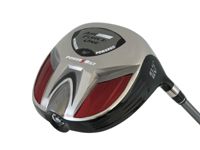
Here's some new golf technology for you: PowerBilt is filling the head of a golf club with nitrogen gas. NO, it doesn't sound like a Whoopee Cushion when you hit it and NO it doesn't explode--although the company says the idea is to get explosive power off the tee.

Just in case you miss the point, the line is called "Air Force One."

PowerBilt says that by filling the head of a driver, fairway wood, or hybrid with nitrogen gas, it can offer clubs with multiple face thicknesses, thus allowing all golfers to flex the face the way pros do.

The compressed nitrogen, which is pumped in to a pressure of 150 psi, supports the face with no mechanical bracing. There is a face thickness for big hitters and one for golfers with a more-controlled swing in the line. The face of any good driver flexes when it hits a golf ball, producing what is often referred to as the “trampoline” effect. The thinner the face, the more it flexes, although there is a point beyond which the USGA police can arrest you for using a club that's "non-conforming."

I tried the technology out at Chelsea Piers in New York and was suitably impressed. It may have been my imagination, but I swear I could feel the club face flex when I hit one on the screws. That didn't happen often due to operator error, but when it did the results were as advertised--long and straight. I particularly liked the three-wood, probably because the shaft on the demo drivers was a standard length whereas I normally hit a driver that's cut down an inch.

The clubs will be a particular boon, I suspect, to those of us with slower swing speeds. We get no trampoline effect off a standard club face, so the thinner face on the PowerBilt line should give us a little extra "oomph" where it counts.

Dave Donelson, author of Heart of Diamonds a about in the

Thursday, April 3, 2008

A Fitting Encounter

Playing golf with off-the-rack clubs is akin to chewing a steak with store-bought teeth. You can do it, but the experience is far from optimal. Fortunately, just as there are plenty of specialists to properly fit new choppers to your mouth, there are numerous places in Westchester to get measured for perfectly fit golf clubs.

There are three basic ways to go. One is to a golf retailer, where a salesperson will use several devices to make sure the sticks you buy match the peculiarities of your swing the way a tailor will match your 30-inch inseam to your 42-inch waist. The second is to the golf club pro shop, where a PGA professional will lend his or her considerable expertise to the process. The last is to a club fitting service, where the technician will measure most of the moving and some of the non-moving parts of your golf swing, your anatomy, and maybe even your psyche. They use radar, lasers, ultra-high-speed cameras, strobe lights—you name it, they measure it. Then they feed it into their computer and come back with a profile of what happens when you swing a club at a golf ball.

My first experience with high-tech club fitting was with Rick DeMane, a third-generation golf technologist located in Greenwich, CT. It was fascinating to hit the ball in his studio surrounded by mysterious gizmos, then take a peek at the instantaneous feedback that explained in excruciating computerized detail why my last swing looked like something spectators should wear helmets to watch. After I tried out several drivers, he modified a couple of promising ones to my specs that I then took to the driving range. While the results aren’t Tigeresque, I came away with a club that pounds the ball a respectable distance and even hits the fairway (slightly) more often than not.

It's hard to tell if the results came from increased confidence or the technologically correct implement in my hands, but I've been pretty happy with it either way.

Dave Donelson, author of Heart of Diamonds a about in the